
The African School of Governance convenes thousands for its inaugural Africa Mindset Reset Forum
Long before colonial rule, Africans had agency over their resources, manpower, rulership, boundaries and lifestyle, until the Scramble for Africa and the partition that followed the 1884 Berlin Conference. Even though Africans picked themselves up from the 1950s and fought against the colonialists, the damage was already done. Cultures were diluted, resources had different stewards, and the mindset remained the biggest constraint.
When the African School of Governance (ASG) came into existence, it intended to serve three purposes: academics, research and convenings. Almost two years in, the school asked what problems its convenings should solve, and the biggest was the mindset of many African individuals and institutions.
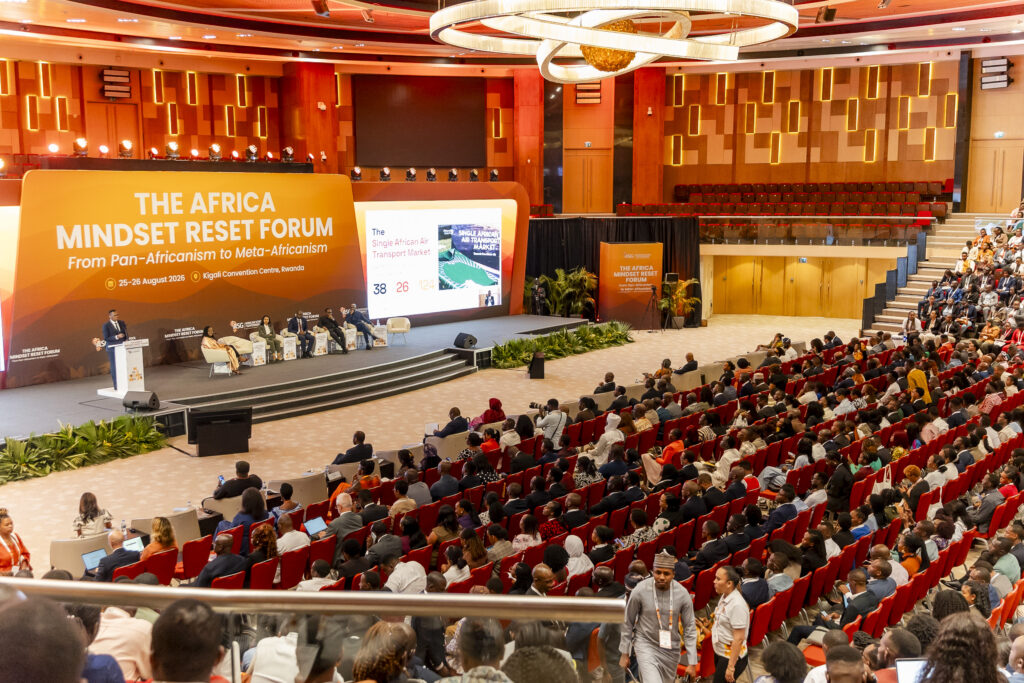
That became the focus of the inaugural Africa Mindset Reset Forum, held at the Kigali Convention Centre on 25 and 26 August 2026 under the theme “From Pan-Africanism to Meta-Africanism”. Pan-Africanism won Africa its independence and its solidarity. Meta-Africanism is about what Africans do with them, and whether African institutions can deliver on what the continent already agrees it wants.
The Forum was co-convened by ASG’s co-founders, H.E. Paul Kagame, President of the Republic of Rwanda, and H.E. Hailemariam Desalegn, former Prime Minister of Ethiopia and Chair of ASG. The school was deliberate about making this a movement rather than a one-time event, because a reset cannot take place over two days.
ASG ran the reset as a campaign that included X Spaces, the Systems Audit TV special and youth-led webinars. The July youth webinar alone drew over 200 young Africans and made clear what they expected from Meta-Africanism. They wanted African countries connected to each other. They wanted Africans to own African resources. They wanted work at home dignified enough that leaving stops being the default ambition. They wanted food systems built together rather than country by country. Those four themes ran through the Forum a few weeks later.
The first of those themes got its own pre-Forum session on open skies, where RwandAir CEO Yvonne Manzi Makolo shared her own experience. “A few months ago, I priced two tickets out of Kigali. One to a city on another continent. One to a city less than two hours away, on my own continent. The international ticket was cheaper.”
On the regional route, she said, taxes, fees and overflight charges made up nearly half the fare. Rwanda’s Minister of Trade and Industry, Antoine Kajangwe, said Africa needs “affordable, frequent, and reliable air connectivity,” not another commitment on paper.
The Forum itself targeted 80% youth, since a reset would not be relevant without Africa’s next leaders in the room. ASG had planned for 1,000 participants. By the time registration closed, 6,630 people from 80 countries had applied, nearly 4,900 of them under 35, and 2,733 leaders were confirmed to attend in person. Over 67,500 people followed online in English, French, Portuguese, Swahili and Arabic.
ASG also brought in 40 creators from across Africa. They arrived three days early for a route through Kigali that ran from the Kigali Genocide Memorial to BK Arena to Norrsken House, then spent a day making work together at the school. The order was deliberate: remembrance, restoration, then a development story with citizens at the centre. The thinking was that people who speak to young African audiences should understand the argument before they carry it.
The Forum also had its own theme song, Move Africa, unveiled as part of the programme so people left with something that stayed with them after the conversations ended.
Opening the Forum, ASG President, Francis Gatare said, “Africa doesn’t lack resources or talents. What it needs is the right mindset.” Building that mindset is exactly why ASG exists, he added, and the worst kind is the scarcity mindset, “the belief that the pie is limited.”
President Kagame was blunt about what change will take. “We cannot change the continent without changing our behaviour, our way of doing things, our attitude,” he said.
Discussions centred on the gap between Africa’s ambitions and its delivery, from fragmented markets and currencies to restrictive visa regimes. Speakers pointed to an estimated $4 trillion in African capital still held outside the continent. Former South African President Thabo Mbeki warned against the Forum becoming “a lovely talk shop.”
The Forum closed with commitments backed by institutions. Rwanda will review and reduce the air transport fees and taxes Makolo described, and the African Development Bank will establish an African Airplane Fleet Facility so African airlines can lease aircraft without paying cash upfront. Kenya will host a Trust Summit in October.
ASG will establish the Centre on Africa Mindset and Home-Grown Solutions and launch the Sovereign Negotiators Credentialing Initiative with the Accra Reset. Other initiatives include a Journal of Meta-Africanism and African Mindsets, and Public Finance for Prosperity and Resilience, a partnership with Vanguard Economics, starting with the health sector.
The Forum will now be held every year, and ASG will track and report back on the commitments made at each edition.
“Africa’s future will not be determined by what has happened to us, not by our pain, but it will be determined by what we choose to become,” said H.E. Hailemariam Desalegn in his closing address.