
Africans Must Start Acting Like Owners, Not Caretakers
By Ayebilla Avoka – MPA Pioneer
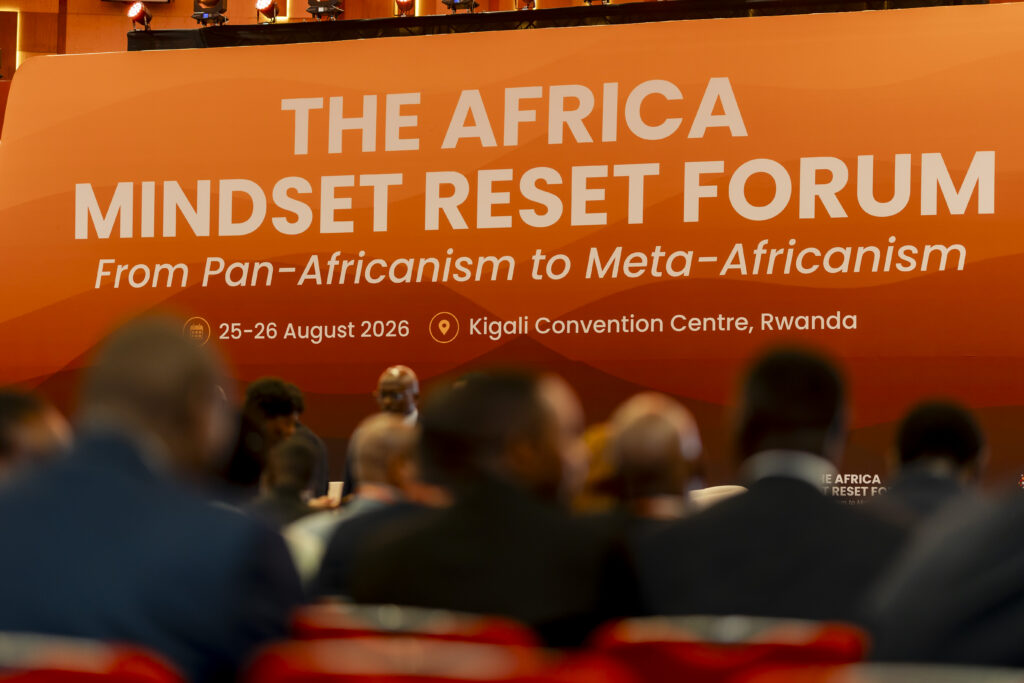
In July, ahead of the Africa Mindset Reset Forum in Kigali, I was invited to contribute to the youth-led webinar, From Pan-Africanism to Meta-Africanism, organised by the African School of Governance. I was asked a simple question: “What mindset shift does Africa need?”
My answer was equally simple: “Africans behave like caretakers on their own farms. We must start behaving like owners.” It was an answer that fit neatly into a thirty-second video, but not one that could be fully explained in thirty seconds. The forum has since come and gone, but the question has stayed with me. This article is an attempt to explain what I meant.
Imagine two people working on the same farm. One is a caretaker. He keeps the farm functioning because that is his job. He weeds the fields, feeds the animals, and repairs broken fences. But his responsibility ends there. He has little reason to plant trees that will only bear fruit decades later or invest in irrigation systems whose benefits he may never enjoy. If the farm deteriorates, he simply moves on.
The other is the owner. Every decision carries weight because every consequence comes back to him. He improves the soil, plants for future harvests, and protects the land because he expects his children to inherit it. He is willing to sacrifice today because he believes tomorrow belongs to him.
The difference between the two is not intelligence, skill, or even hard work. It is ownership.
Economists have long understood that ownership shapes behaviour. Where people are confident that they will enjoy the future returns from their investments, they are more likely to build, conserve, and plan for the long term. Where ownership is insecure, the incentives change. People focus on extracting as much value as they can today because they are uncertain that they will still benefit tomorrow.
Research on natural resource governance points the same way. In one well-known study from Ghana, economists Markus Goldstein and Christopher Udry found that farmers with less secure rights to their land left it fallow for shorter periods, because a plot left idle could be given to someone else. Their land was less productive as a result. When the security of ownership declines, investment falls and long-term stewardship gives way to short-term thinking.
This principle extends far beyond natural resources. It helps explain why some nations steadily build prosperity while others struggle to turn abundant resources into lasting development. Nigeria, for example, earned hundreds of billions of dollars from oil during the second half of the twentieth century. Yet despite this extraordinary wealth, average living standards stagnated and, in many respects, declined. Natural resources alone do not guarantee development. Without institutions that encourage long-term ownership and accountability, even great wealth can be consumed without creating lasting prosperity.
To be fair to the caretaker, he is not lazy. He is responding sensibly to his situation. Why plant for the next generation on land you could be moved off tomorrow? Many Africans live with that kind of uncertainty. So the shift has to run both ways. Citizens must start acting like owners, and our institutions must start treating citizens like owners.
But institutions are built and run by people. This is why I believe Africa’s greatest challenge is not simply economic or political. It is the way we relate to what is ours.
Too often, we relate to Africa as caretakers rather than owners. We behave as though someone else bears the ultimate responsibility for our future. We criticise governments as spectators instead of recognising that public institutions ultimately reflect the expectations and actions of citizens. We celebrate individual success abroad while quietly assuming that transforming Africa is someone else’s assignment.
The questions we ask reveal the mindset we hold. A caretaker asks, “What can I get from this place?” An owner asks, “What can I build for this place?”
That difference changes everything. Owners protect public resources because they understand that these resources are part of their inheritance. They reject corruption because taking from the public means taking from the society in which they and their children must live. They invest in businesses, schools, and communities because they expect to live with the consequences of today’s choices.
This principle also applies to resources that no single individual owns. Decades of research on forests, fisheries, and grazing lands, much of it by the Nobel laureate Elinor Ostrom, show that communities can manage shared resources sustainably when they develop clear rules, a genuine sense of belonging, and mechanisms for mutual accountability. Where these are absent, individuals have stronger incentives to pursue immediate gains, even when doing so gradually destroys the resource everyone depends on.
Some will say that many African leaders already behave like owners, treating the state as their own. But a leader who helps himself to public resources is behaving like the individual in a poorly governed commons, taking what he can before someone else does. An owner builds for those who will inherit the farm.
The same logic applies to a country. Ownership does not mean that we must do everything ourselves. It does not mean rejecting outside help, partnerships, investment, or knowledge. An owner can invite others to help build the farm. An owner does not even have to live on the farm to invest in it. What matters is who ultimately feels responsible for whether the farm succeeds or fails. That is the mindset Africa needs.
We cannot outsource responsibility for our development. Foreign governments, development agencies, investors, and international organisations can support Africa’s progress, but they cannot care more about Africa’s future than Africans do. The ultimate responsibility remains ours.
The generation before us fought to reclaim Africa’s political independence. Our generation must reclaim something equally important: a sense of ownership. We must stop seeing Africa as a temporary station before life begins somewhere else. We must begin to see it as our permanent investment, a continent whose future is inseparable from our own.
Pan-Africanism taught us to reclaim Africa. Meta-Africanism must teach us to own it. Ownership is more than a legal title. It is a way of thinking. It shapes how we lead, how we govern, how we invest, and how we care for what belongs to us. There is no other farm to inherit. There is only ours. And the harvest our children reap tomorrow will depend on whether we continue to behave like caretakers or finally choose to become owners.
Ayebilla Avoka is a second-year Master of Public Administration student in the pioneer cohort at the African School of Governance in Kigali.
Follow his Linkedin: Ayebilla Avoka